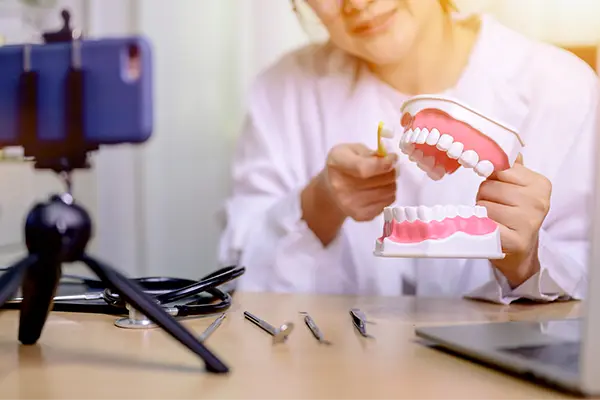
If you run a dental practice, you already know that trust drives new patient decisions. According to a 2025 BrightLocal survey, 87% of consumers read online reviews for local businesses before booking an appointment. For dentists, that number is often even higher because people want to feel safe about their healthcare provider. This post will show you how to get more Google dental reviews using smart, ethical, and patient-friendly tactics that actually work.
Unlike generic tips you may have read before, these strategies focus on what makes dental practices unique. You will learn how to remove patient barriers to leaving reviews, how to ask at the right time, and how to leverage your staff to drive a steady stream of positive reviews.
Why Google Reviews Matter So Much for Dental Practices
- They appear directly in Google’s search results and Maps.
- They influence local ranking factors, which can push your practice higher in the “dentist near me” results.
- They build trust before a patient ever clicks your website.
Google reviews are the modern form of word-of-mouth marketing. The more high-quality reviews your dental office earns, the more likely patients are to call you instead of the dentist down the street.
1. Make Leaving a Review Simple for Patients
Many dental offices still ask patients to “go online and leave a review” without giving a clear link or instructions. This creates friction. Most patients want to help you but will not spend time searching for your listing.
What to do:
- Use Google’s Place ID link generator to create a direct review link. (Google offers this free here: Google Business Profile Help)
- Add that link to your email signature, appointment reminders, or even a small card you hand out after a visit.
- Test the link to make sure it opens the review box directly.
By removing barriers, you make it effortless for a patient to take action while their experience is still fresh.
2. Ask for Reviews at the Right Time
Timing matters. The best moment to ask for a review is right after a positive experience. For dentists, this often means:
- Immediately after a successful treatment when the patient expresses gratitude.
- Right after a new patient exam or cleaning when they are most impressed with your care.
- At checkout or during a follow-up email the same day.
Say something like:
“Thank you for coming in today. It really helps our practice when patients share their experience online. Would you mind leaving us a quick review on Google? Here’s a direct link to make it easy.”
This personal, immediate ask doubles your chances of success compared to a generic email days later.
3. Train Your Team to Help Collect Reviews
Your staff can be your best ally. Patients often have stronger personal connections with hygienists or front desk staff than with the dentist alone. When those team members politely ask for a review, patients are more likely to comply.
Ideas:
- Add a note to your patient management system prompting staff to mention reviews at checkout.
- Give your team short scripts to use so they feel confident.
- Track how many reviews come in from staff requests and recognize team members for their efforts.
Google’s guidelines do not allow you to offer patients incentives for reviews, but you can reward your staff for helping bring them in.
4. Segment Happy and Unhappy Patients Before Asking
One risk of mass email requests is triggering negative reviews from patients who had issues. Instead, filter your list:
- Start your email with a quick question about their experience.
- If they indicate a problem, direct them to your office to resolve it privately.
- Only send the review link to patients who had a positive experience.
This reduces the chances of negative reviews appearing on Google while showing unhappy patients that you care enough to address their concerns directly.
5. Automate Review Requests Without Losing the Human Touch
If your patient list is large, manual outreach is not scalable. Use your practice management software or a HIPAA-compliant email marketing tool to automate requests.
Tips for success:
- Stagger requests so they do not all appear on Google at once.
- Personalize each email with the patient’s name and treatment details.
- Add a short video message from you or your staff to make it more authentic.
Patients respond better to genuine, personal messages even if they are automated.
6. Respond to Every Review—Positive or Negative
Many dental practices miss this step. When you reply to reviews, you show future patients that you care and are engaged. Google also views active responses as a trust signal.
How to do it well:
- Thank positive reviewers by name and mention something specific if possible.
- Respond professionally to negative reviews without getting defensive. Acknowledge the issue and offer to resolve it offline.
- Keep responses brief, sincere, and HIPAA-compliant. Never reveal patient details.
This shows prospective patients that your practice values feedback and maintains high standards.
7. Showcase Your Reviews Across All Marketing Channels
Do not let your Google reviews sit hidden. Highlight them wherever prospective patients might see them:
- Add a reviews carousel to your website’s homepage.
- Share positive reviews on your social media pages.
- Include a “See Our Reviews on Google” link in your email newsletter.
- Feature patient success stories (with their consent) in blog posts or videos.
This reinforces trust, builds social proof, and encourages even more patients to leave feedback.
Bonus Tip: Educate Patients About Why Reviews Matter
Sometimes patients hesitate because they do not see how their review helps. A simple explanation can make a big difference:
“Your review helps other patients who are looking for a trusted dentist in our area. It also helps us continue to improve our care.”
This appeals to their sense of helping others, which research shows increases follow-through rates.
Common Mistakes to Avoid
- Offering Incentives for Reviews: Google forbids this and may penalize your listing.
- Using Fake or Pre-Filled Reviews: This violates Google’s terms and can permanently harm your online reputation.
- Ignoring Negative Reviews: Silence signals that you do not care about patient feedback.
FAQ: Getting More Dental Reviews on Google
How many Google reviews does a dental practice need to stand out?
There is no magic number, but more reviews with a high average rating signals trust. In competitive cities, 30+ recent reviews is often enough to outperform other dentists.
Can I offer a discount or gift for patients who leave a review?
No. Google prohibits offering any incentive in exchange for reviews. However, you can thank patients verbally and reward your staff for helping bring reviews in.
What is the best way to handle a negative review?
Respond quickly and professionally. Acknowledge the patient’s concern, apologize where appropriate, and invite them to contact your office to resolve it privately.
Should I hire an agency to manage my reviews?
If you lack time or staff, outsourcing can help. Look for an agency experienced in dental marketing and Google Business Profile optimization to stay compliant with Google’s policies.
Where can I learn more about ethical review practices?
Check the American Dental Association or Google’s Business Profile guidelines for current policies.
Turn Reviews Into a Growth Engine
Google reviews are no longer optional for dental practices, they are essential for local visibility and patient trust. By making it easy for patients to leave reviews, timing your requests correctly, training your team, and responding professionally, you can build a steady stream of positive feedback that fuels practice growth.
If you want expert help setting up automated review collection or improving your Google Business Profile, our dental marketing team can handle it for you while you focus on patient care.