

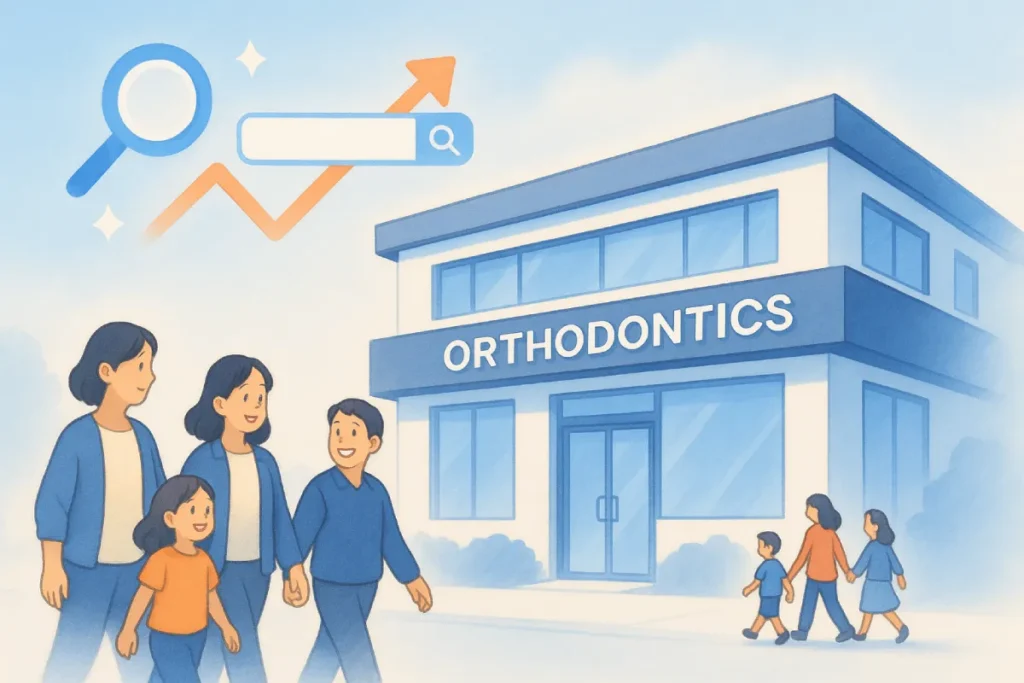
Running an orthodontic practice today is very different than it was even a few years ago. Most of your new patients start their journey online. They search Google for “braces near me” or “Invisalign orthodontist in [city]”. If your practice doesn’t show up, you lose that patient to the office down the street.
That is where SEO for orthodontists comes in. Search engine optimization is how you position your practice at the top of Google so more patients find you, trust you, and book an appointment.
The good news is you don’t need to be a marketing expert to understand how it works. Let’s walk through the most effective strategies to bring more patients into your chair.
Why SEO Matters for Orthodontists
Think about how people search for healthcare. They don’t flip through the Yellow Pages anymore. They type into Google:
- “Orthodontist near me”
- “Cost of Invisalign in [city]”
- “Best orthodontist for kids in [city]”
If you are not visible in those searches, you are invisible to potential patients.
Here is why SEO is so valuable for orthodontists:
- Patient intent is high. People searching these terms are already looking for treatment.
- Local competition is tough. Most cities have dozens of orthodontists. SEO helps you stand out.
- Trust is built online. A higher ranking and good reviews signal credibility.
Step 1: Start with Local SEO
For orthodontists, local SEO is where most wins happen. Your patients are nearby, so Google needs to connect your practice to local searches.
Practical tips:
- Claim and optimize your Google Business Profile. Add photos, services, office hours, and encourage patient reviews.
- Build consistent NAP citations (Name, Address, Phone) across dental directories and local listings.
- Target geo-specific keywords like “orthodontist in [city]” or “braces for teens in [city]”.
When someone types “orthodontist near me”, your practice should be the one showing up in the local 3-pack.
Step 2: Optimize Your Website for Orthodontic Keywords
Your website is the foundation of your SEO strategy. Google uses it to decide if you are the right answer to a searcher’s question.
What to do:
- Use orthodontic service keywords like Invisalign, braces, retainers, pediatric orthodontics.
- Write dedicated service pages for each treatment. One page for Invisalign, another for clear braces, and so on.
- Include city and neighborhood names in your titles and headings. Example: “Invisalign Orthodontist in Dallas, TX.”
This helps Google match your site to the exact services and locations patients are searching for.
Step 3: Create Helpful Blog Content
Blogging is one of the most underused tools for orthodontists. It’s not just about SEO, it’s about education and trust.
Ideas for blog posts:
- “Braces vs Invisalign: Which Is Right for Teens?”
- “How Much Do Braces Cost in [City]?”
- “Top 5 Questions Parents Ask About Orthodontic Care.”
Why it works:
- Answers patient questions before they even call your office.
- Positions you as an expert in orthodontics.
- Gives Google fresh content to index, which helps rankings.
Step 4: Leverage Online Reviews
Reviews are not just for reputation, they also impact SEO. Google favors orthodontists with more positive, recent reviews.
How to do it:
- Ask every happy patient to leave a Google review.
- Make it easy by sending a direct link via email or text.
- Respond to all reviews, even negative ones, to show professionalism.
A steady flow of positive reviews boosts both visibility and trust.
Step 5: Build High-Quality Backlinks
Backlinks are links from other websites pointing to yours. They act like digital votes of confidence, signaling to Google that your site is trustworthy.
How orthodontists can earn backlinks:
- Submit your practice to local dental directories and chamber of commerce listings.
- Write guest articles on dental association blogs or local community websites.
- Partner with local schools or charities and get mentioned on their sites.
Avoid spammy link schemes. Focus on quality, not quantity.
Step 6: Improve Site Speed and Mobile Experience
Most patients browse on their phones. If your website loads slowly or looks clunky on mobile, they will leave. Google notices this too.
Quick fixes:
- Use a fast, reliable hosting provider.
- Compress images so they load faster.
- Make sure your site design is responsive, so it adapts to mobile screens.
A smooth mobile experience increases patient trust and keeps visitors engaged.
Step 7: Track Results and Adjust
SEO for orthodontists is not a one-time setup. It’s an ongoing process.
How to track success:
- Use Google Analytics to see which pages bring in traffic.
- Use Google Search Console to see what keywords you rank for.
- Monitor your rankings and leads monthly to spot growth trends.
This data tells you what’s working and where you need to adjust.
FAQ: SEO for Orthodontists
How long does SEO take to show results for orthodontists?
Most practices see measurable improvements within 3–6 months. Competitive cities may take longer, but consistent effort pays off.
What keywords should orthodontists target?
Start with treatment keywords like Invisalign, braces, retainers, and pair them with local terms like your city or neighborhood.
Do orthodontists really need blog posts?
Yes. Blog posts educate patients, improve trust, and give Google more content to index. They also help you rank for long-tail search terms.
Are Google reviews important for SEO?
Absolutely. Reviews improve your local SEO ranking and influence patient decisions. More reviews often equal more patients.
Should orthodontists run paid ads instead of SEO?
Paid ads can bring quick wins, but SEO builds long-term visibility and trust. The best strategy often combines both.
Build Lasting Visibility with SEO
SEO for orthodontists is not about tricks or quick fixes. It’s about making your practice easy to find, trustworthy to patients, and valuable in Google’s eyes.
When you optimize your website, create helpful content, and earn local visibility, you put yourself ahead of competitors who are still relying on word of mouth alone.
Start small. Claim your Google Business Profile, optimize your service pages, and encourage patient reviews. Over time, these efforts stack up and turn your website into a steady source of new patients.
If you want to dive deeper, you can explore resources from the American Dental Association or trusted marketing guides that focus on healthcare practices.